Designing A Climate-Positive Energy Retail Business for Australia's Largest Telco
2020

Overview
In 2020, I was hired by Telstra to lead the user experience team responsible for launching Telstra Energy, a climate-positive energy retail business representing Telstra's strategic diversification into a new vertical. Leading a team of UX designers, visual designers, and copywriters across multidisciplinary squads, I developed the product strategy and experience vision for integrating energy retail into Telstra's existing digital ecosystem, navigating complex stakeholder landscapes and technical constraints to deliver a phased roadmap of customer releases.
Context
Telstra recognised a unique opportunity in the energy retail market: they already communicated with customers at pivotal moments like moving house – precisely when people were considering their energy choices. Despite the potential for significant savings and the chance to avoid the loyalty tax that penalised long-term customers, 70% of Australian households didn't switch energy providers, creating a substantial market opening for a trusted brand with existing customer relationships.
At a time when the market was growing tired of companies exploiting customers and the planet, a climate-positive energy retail business was a natural extension of Telstra's climate ambition and objective to decarbonise Australia. In February 2020, the Telstra board endorsed a strategy to diversify into the provision and retailing of energy. Telstra Energy was born.
The challenge was substantial. I needed to determine how to integrate energy retail into Telstra's existing digital properties – the flagship website, the authenticated service experience, and the mobile app – whilst serving customers across two fundamentally different verticals with different regulatory requirements, billing cycles, usage patterns, and customer expectations.
Approach
Working closely with multiple departments including mission owners, product managers, marketing, and service design, I began by mapping stakeholders and performing extensive interviews, research, and analysis across existing platforms, properties, and customer journeys to understand the current structure and constraints.
This stakeholder mapping proved critical. Telstra's digital properties were mature, optimised systems serving millions of telecommunications customers. Introducing energy meant navigating carefully around existing teams, respecting what worked whilst identifying where modifications were needed. Some functionality that worked perfectly for telecommunications wouldn't translate to energy retail, requiring sensitive negotiation and collaborative redesign.
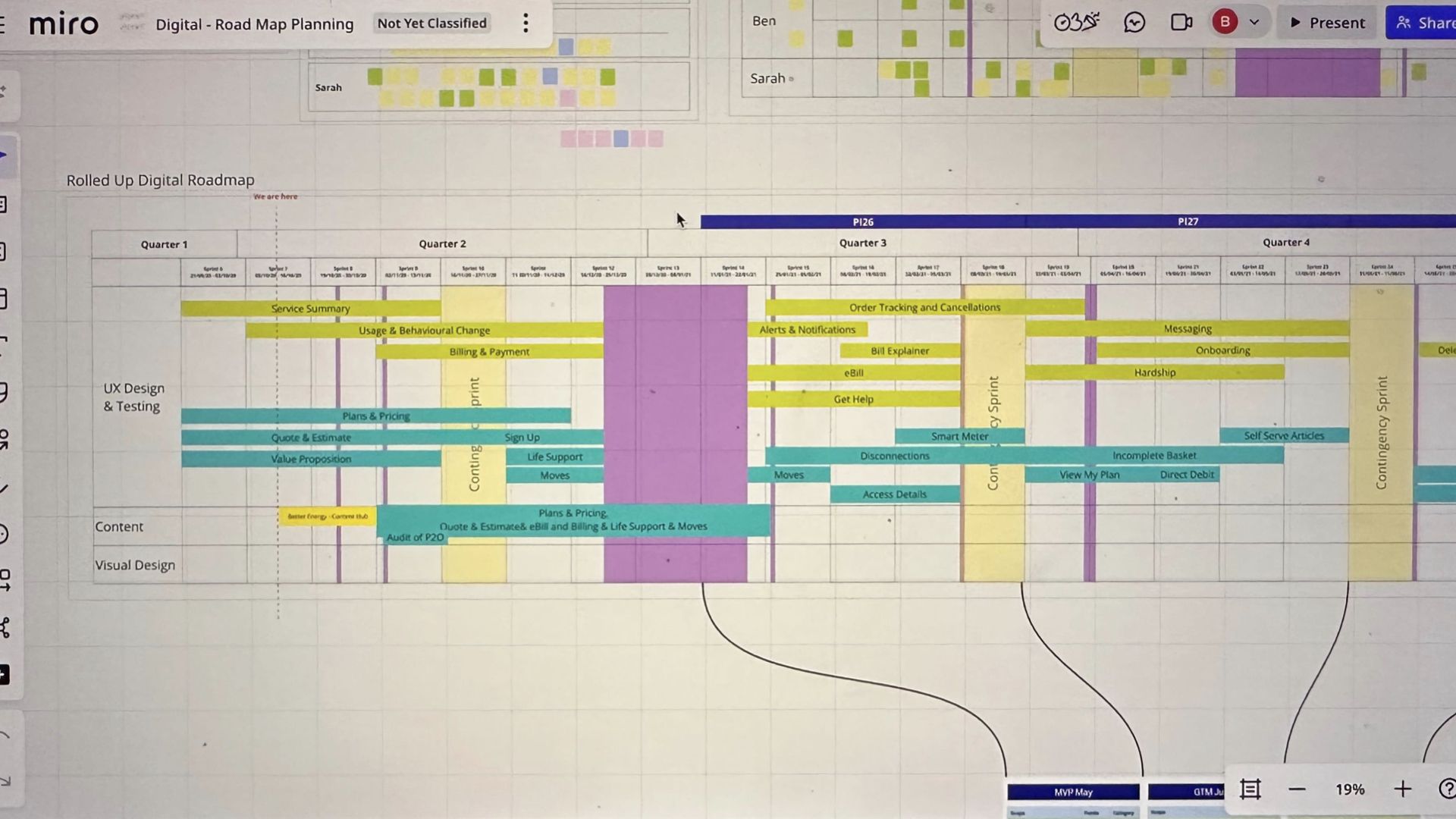
I worked with members of the energy project team to capture requirements and define a series of releases and functionality within each release. We structured this as a numbered customer release format (CR1, CR2, etc.), creating user journeys and a product development roadmap that balanced ambition with feasibility.
A large part of my role was determining what would and wouldn't go into each customer release, tracking what the journeys would look like, and creating a product vision for each release that balanced what was feasible to develop against what the business wanted to provide in terms of functionality and experience over time.
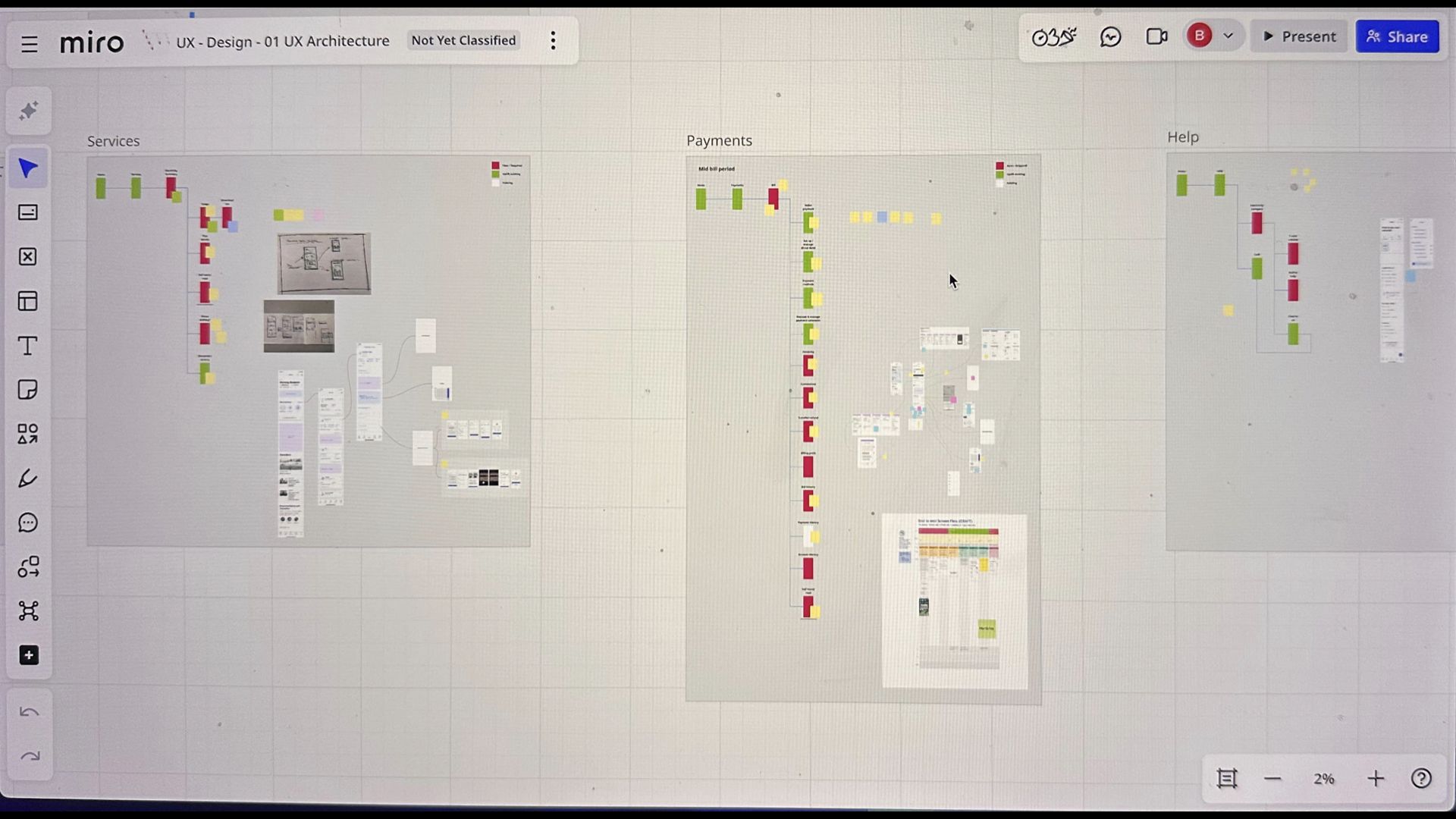
Another significant aspect was managing the team and ensuring the right people with the right skill sets were working on the right things. I worked closely with engineering to negotiate how best to achieve our experience vision within constraints, constantly balancing what was viable and feasible.
The role required playing strategic designer, understanding which stakeholders held power, speaking to people in terms that resonated based on their needs, and doing extensive negotiation to move the project forward whilst maintaining relationships across the organisation.
Outcome
We successfully developed and delivered a comprehensive product strategy and phased implementation roadmap for Telstra Energy. The customer release structure provided clear visibility into what would be delivered when, allowing the business to plan go-to-market activities whilst giving engineering teams manageable, achievable milestones.
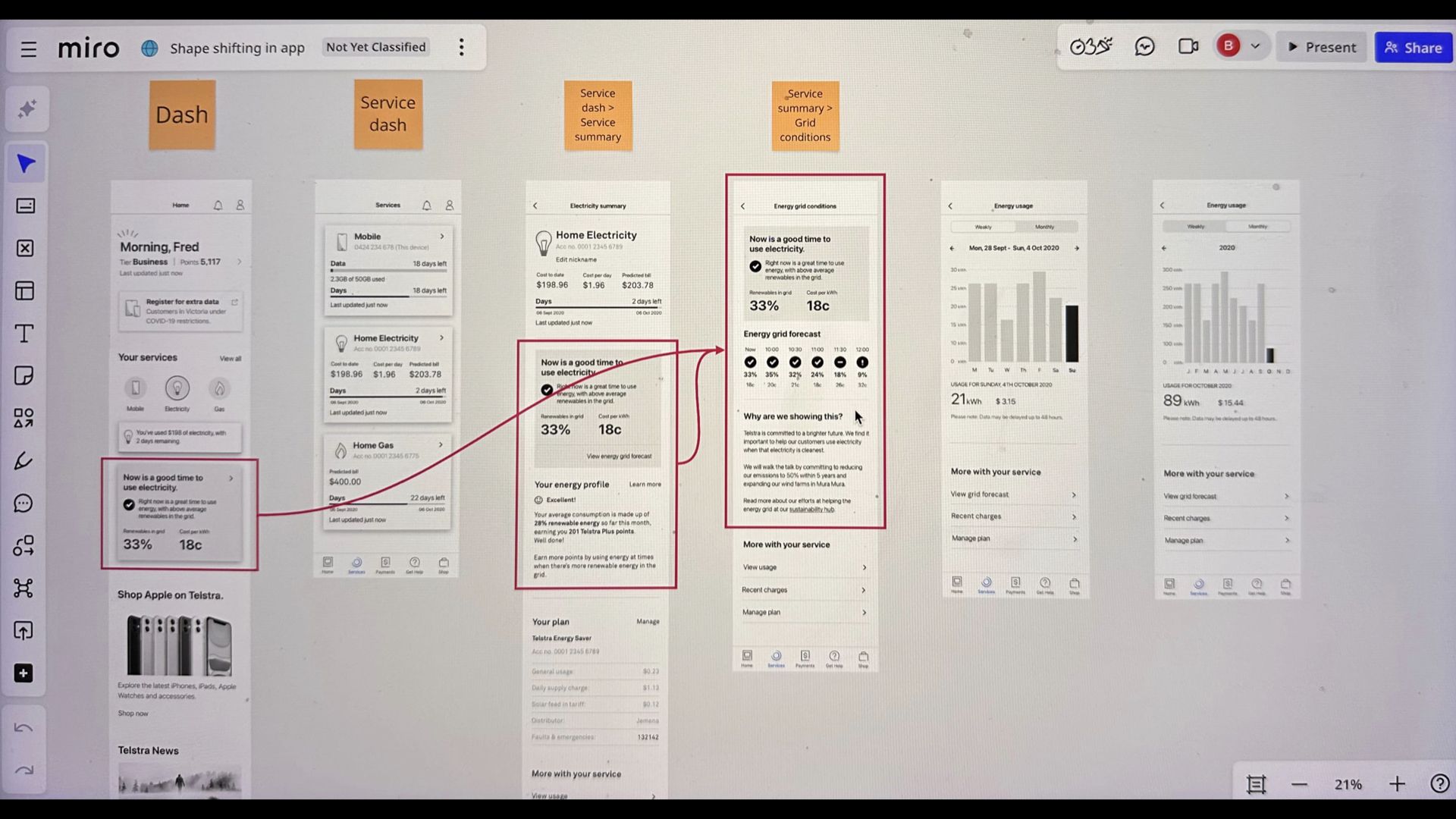
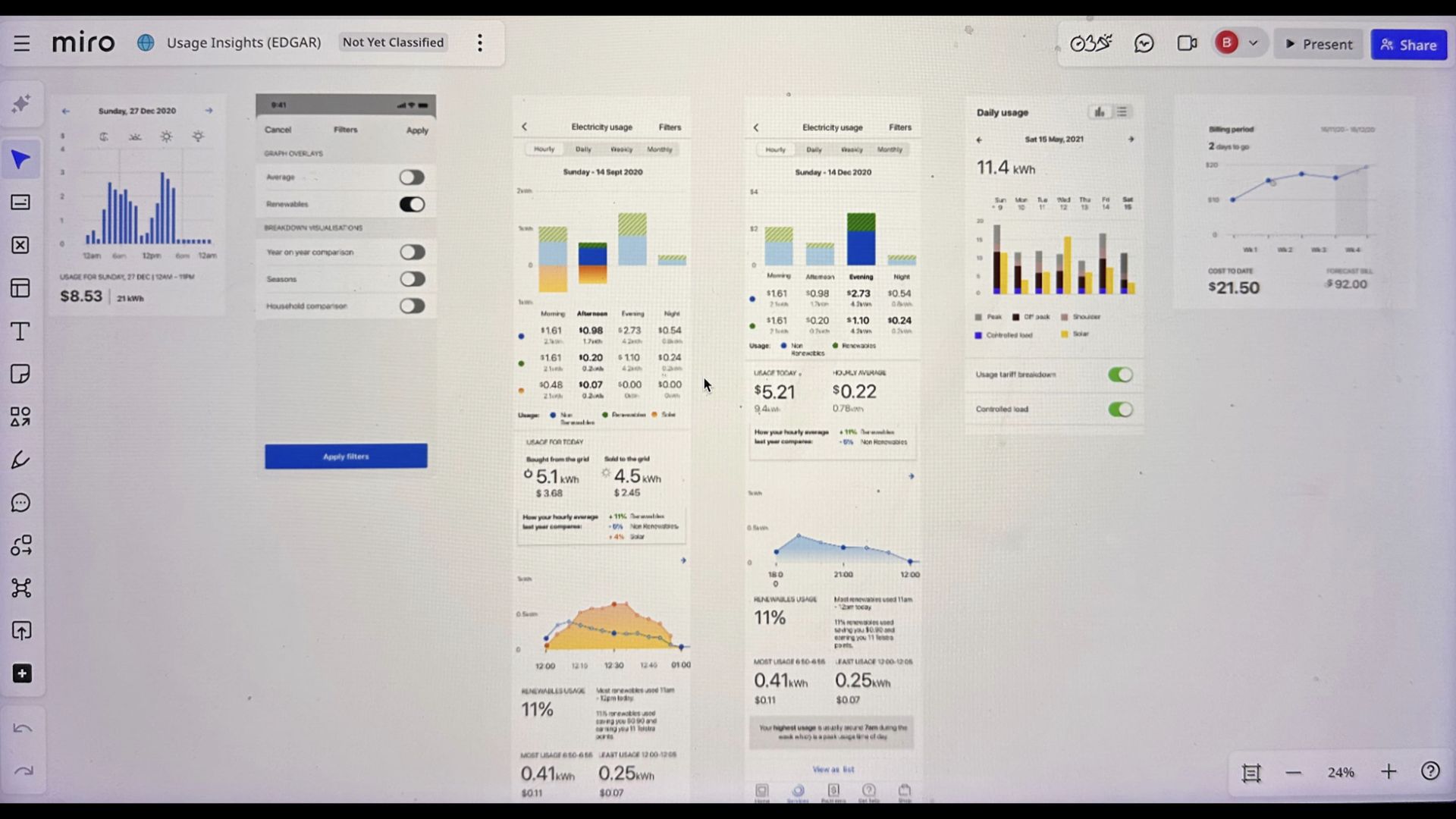
The integration strategy we developed ensured energy retail could coexist within Telstra's digital properties without compromising the experience for existing telecommunications customers. We identified shared components that could serve both verticals and specific areas requiring tailored experiences.
Unfortunately, external factors intervened. Global events in 2022 created volatile energy prices and significant geopolitical uncertainty. The decision was made to put the energy project on hold indefinitely. It was deemed not the right time for a telecommunications company to be branching out into a different vertical under such uncertain conditions.
Reflection
This project reinforced several important lessons about designing for large, established organisations entering new markets.
First, stakeholder navigation is as important as user research. Telstra's digital properties served millions of customers through mature, optimised systems. Introducing a new vertical meant understanding not just what customers needed, but how to work within existing organisational structures, technical architectures, and team dynamics. The most elegant solution on paper means nothing if you can't build the internal consensus to implement it.
Second, phased release planning is essential for managing complexity and risk. Rather than attempting to launch everything at once, the customer release structure allowed us to build incrementally, learn from each release, and adjust our approach. This proved valuable even though the project was ultimately paused – the work we'd done provided a clear foundation if and when Telstra chose to revisit energy retail.
Third, designing for multiple verticals within a single platform requires careful balance. Telecommunications and energy retail share some commonalities – billing, account management, customer service – but differ significantly in how customers think about usage, switching behaviour, and expectations. The challenge wasn't just technical integration; it was creating experiences that felt natural for both contexts.
Finally, strategic projects don't always launch, and that's okay. External factors – geopolitical events, market conditions, board priorities – can shift in ways no amount of good design can influence. The value wasn't just in what we would have launched, but in the strategic thinking, stakeholder alignment, and foundational work that positioned Telstra to move quickly if conditions changed. Sometimes the designer's role is creating the capability and readiness for future opportunities, even if the timing isn't right today.