Building Australia's #1-Rated Energy App & Leading Digital Transformation
2018
Overview
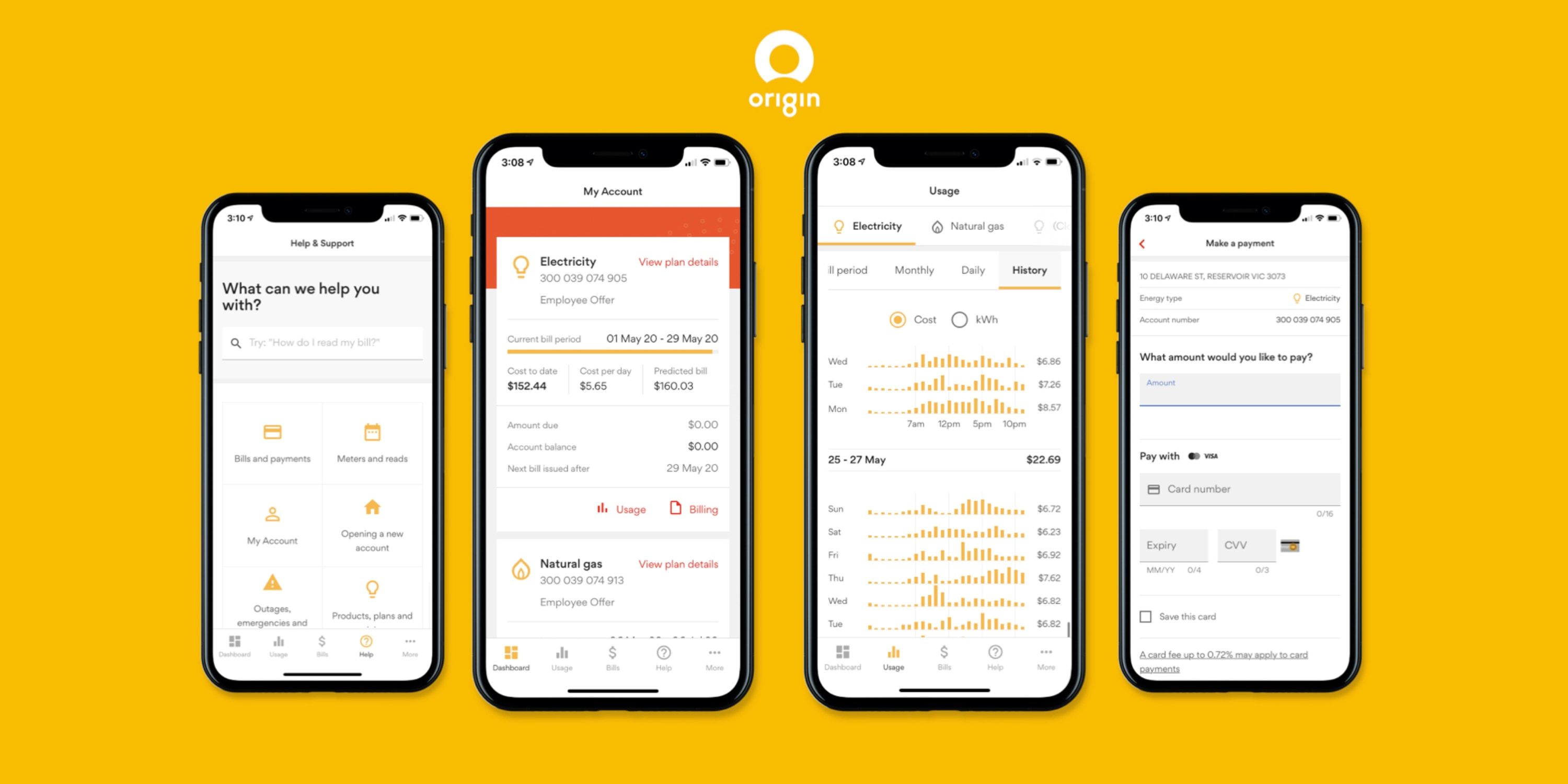
As Experience Design Director at Origin Energy from 2017–2020, I built and scaled the Experience Design practice from inception, leading a team of eight UX designers across eight service design squads responsible for Origin's customer-facing app and authenticated web experience. We increased digital engagement from 14.2% to 31.6%, designed and launched Australia's #1-rated energy app (4.3 stars Apple App Store, 4.7 Google Play), and delivered transformational innovations including a world-first OCR meter-reading workflow. The app won Silver at the 2020 Melbourne Design Awards.
Context
Australia's energy sector was experiencing unprecedented disruption. Renewable generation, micro-grids, blockchain-enabled peer-to-peer trading, and smart home technology were fundamentally reshaping how energy was produced and consumed. Origin Energy – Australia's largest green energy retailer with 4.3 million customer accounts – recognised it needed to transform digitally to stay ahead.
Origin had just appointed a new Chief Digital Officer and was building an entirely new digital team from scratch, backed by executive commitment from the top. The ambition wasn't incremental improvement – it was to accelerate Australia's transition to renewables whilst making energy more affordable and accessible through digital innovation.
I joined Origin as Experience Design Director with a clear mandate: build the Experience Design practice, lead the team responsible for the Origin app and authenticated web service experience, and deliver digital products that would support Origin's renewable energy future whilst dramatically improving customer experience and operational efficiency.
Approach
Sitting alongside the Product Manager and Service Engineering head, I led a team of eight UX designers embedded across eight service design squads. Each squad comprised UX, UI, and content designers, product owners, and developers working together end-to-end on specific domains – billing and payments, usage and data, the homepage, navigation, and other specialised areas of the app.
Much of my role centred on team leadership and capability building. I focused on one-on-one mentorship, coaching, annual reviews, and managing interpersonal dynamics whilst helping designers deliver roadmaps driven by their product owners. Building a high-performing design team meant establishing foundations for how we worked together.
Early on, I developed a team charter to create shared vision and agreed rules of engagement. I also developed design principles to guide decision-making across squads, ensuring consistency whilst empowering designers to work autonomously within their domains.
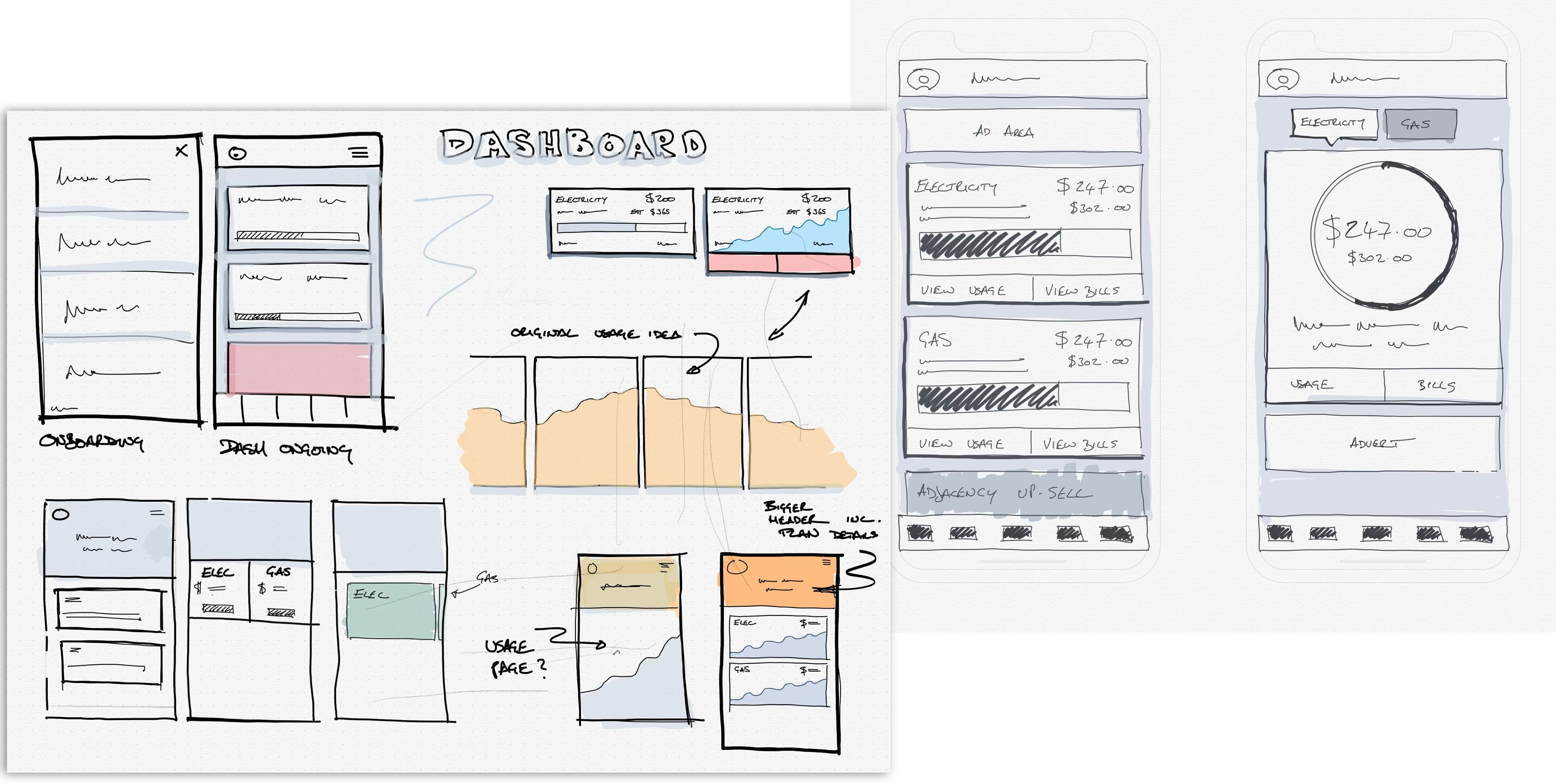
I helped teams explore ideas, run workshops, and define vision for where their product areas were heading. A key part of my approach was teaching designers to work backwards from vision – articulate where you want to be, then develop a roadmap to iterate towards that future state. This strategic thinking elevated the team's capability beyond just executing features.
I played an important mediating role between design and engineering teams, balancing design vision with what engineers could conceivably build. This required understanding technical constraints whilst advocating for user needs, finding creative solutions that satisfied both.
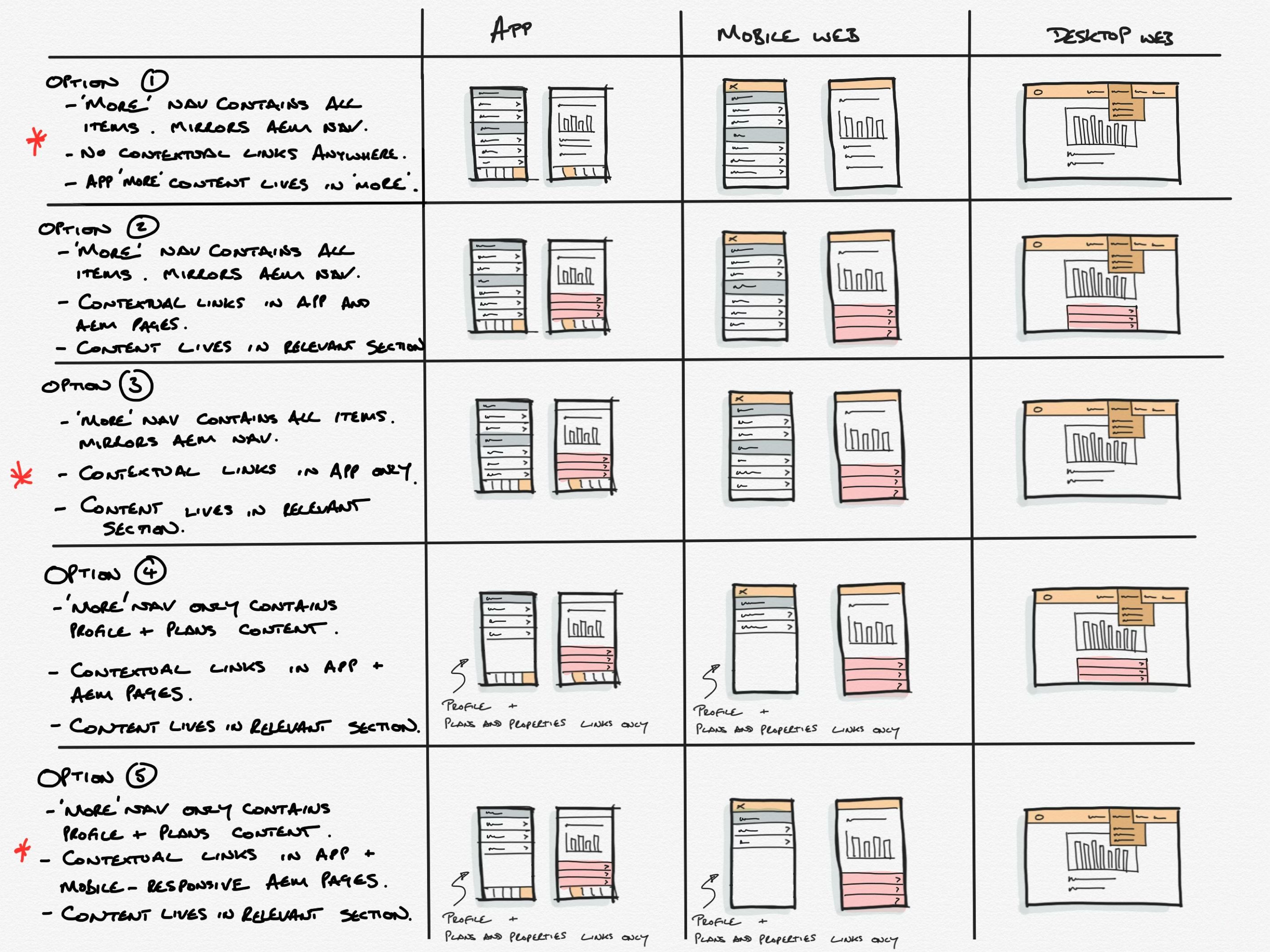
I was also responsible for establishing ideal ways of working across the organisation, documenting these in artefacts and posters that helped spread design practice beyond our immediate team. This work lifted design maturity across Origin's digital organisation.
Beyond team leadership, I conducted experiments and research to identify opportunities that would support Origin's broader digital strategy. This dual focus – building team capability whilst driving strategic innovation – allowed us to deliver transformational outcomes.
Outcome
We delivered significant, measurable impact across multiple dimensions:
Customer Engagement & Satisfaction
- Increased digital engagement from 14.2% to 31.6% through improved end-to-end journeys across key tasks
- Designed and launched Origin's #1-rated energy app, achieving 4.3 stars in the Apple App Store and 4.7 in Google Play
- Won Silver at the 2020 Melbourne Design Awards for the Origin Energy App
- Improved customer satisfaction and digital adoption through intuitive, accessible design
Platform Innovation
- Led a world-first OCR meter-reading workflow that reduced manual calls by 50,000 per month and increased customer self-reads by 4× in its first year
- Delivered market-first React re-platforming effort, reducing operational load and enabling new platform capabilities for future products
- Built technical foundations that unlocked possibilities for smart home integration, IoT capabilities, and Origin's renewable energy future
Team & Practice Development
- Built and scaled the Experience Design practice from inception, establishing design standards, research frameworks, and cross-team rituals
- Lifted design maturity and delivery velocity across eight squads
- Created sustainable ways of working that empowered designers whilst maintaining quality and consistency
- Developed a high-performing team capable of operating autonomously whilst delivering cohesive experiences
Reflection
Building a design practice from scratch whilst delivering transformational products taught me invaluable lessons about leadership and strategy.
First, team capability is the foundation of great work. The OCR meter-reading feature and the #1-rated app weren't just good ideas – they were the result of empowered, skilled designers who understood how to balance user needs, business goals, and technical constraints. Investing in mentorship, establishing clear principles, and creating shared ways of working paid dividends in what the team could deliver.
Second, design leadership requires operating at multiple altitudes simultaneously. I needed to be in the weeds helping a designer think through a complex interaction pattern whilst also stepping back to see the broader platform strategy and identify opportunities like OCR meter reading. The ability to zoom in and out, from tactical execution to strategic vision, was essential.
Third, working backwards from vision creates better roadmaps. Teaching designers to articulate their ideal future state – what the perfect billing experience or usage dashboard would look like – and then plan iterative steps towards that goal resulted in more coherent, purposeful work than simply responding to feature requests. It shifted the team from reactive to strategic.
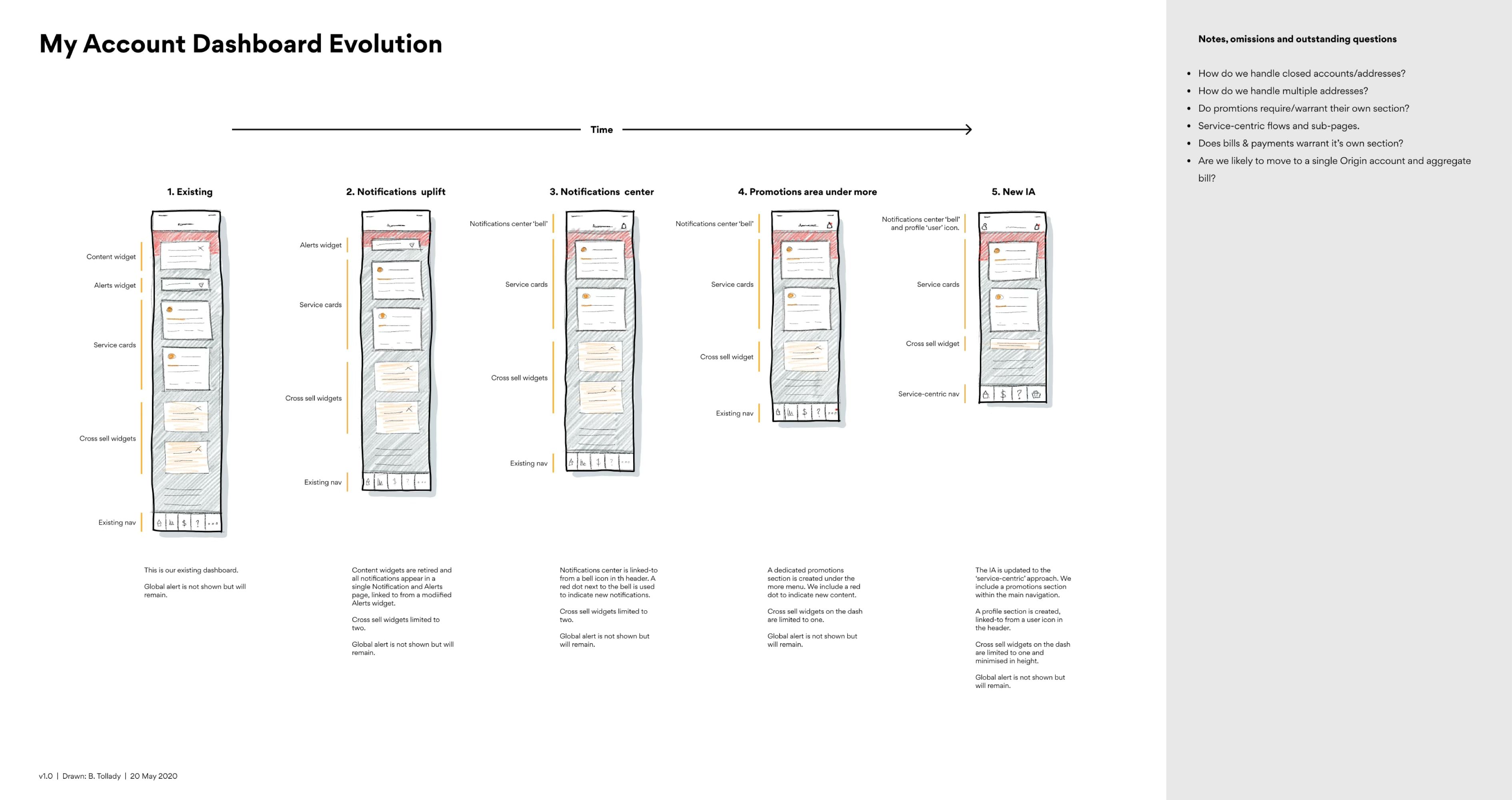
Fourth, the mediator role between design and engineering is critical. Neither discipline serves users well in isolation. Engineers push designers to be realistic and consider constraints; designers push engineers to find creative solutions that serve user needs. The best outcomes emerged from genuine collaboration, not designers throwing specs over the wall.
Finally, spreading design practice beyond the immediate team amplifies impact. Documenting ways of working, creating artefacts, establishing rituals – this work helped product owners, engineers, and stakeholders understand and value design thinking. It created an environment where good design could flourish at scale.
The success of Origin's app – the ratings, the awards, the engagement metrics – validated something important: when you invest in building team capability and establish strong foundations for how design operates within an organisation, transformational outcomes follow. Great products are the result of great teams working in great ways.