Digital Infrastructure for Australia's Leading Women's Health Organisation
2013

Overview
In 2013, I led the UX strategy and information architecture for Jean Hailes for Women's Health, consolidating over 1,200 pages across nine websites into a single, user-centred platform that became the trusted digital destination for Australian women's health information. The result: sessions up 227%, users up 127%, and the foundation for a multi-year strategic partnership delivering transformational digital outcomes and ongoing strategy development.
Context
Jean Hailes for Women's Health is a national not-for-profit organisation behind the hugely successful Women's Health Week. Their mission is to translate academic, evidence-based research into positive practical health outcomes for Australian women – acting as a bridge between medical research and actionable health information that women can actually use.
In mid-2013, Jean Hailes approached Thirst Studios with an ambitious objective: merge over 1,200 pages of health content spread across nine individual websites and aimed at three distinct audiences into one simple, easy-to-use destination for all Australian women.
This wasn't just a technical consolidation challenge – it was fundamental to Jean Hailes' ability to deliver on their mission. Each of the nine properties served different purposes and audiences – from general health information to specific life stages and conditions. The risk was creating a confusing mess that served no one well. The opportunity was creating something genuinely useful that met women wherever they were in their health journey.
The strategic stakes were high. Women's health information online is often fragmented, unreliable, or overly medicalised. Jean Hailes had built trust and authority through decades of evidence-based work, but their fragmented digital presence was undermining that authority. If women couldn't find the information they needed, Jean Hailes couldn't fulfil their mission of translating research into health outcomes.
Furthermore, women's health information needs are inherently complex. The same woman might be navigating menopause, caring for ageing parents, and managing a chronic condition simultaneously. She doesn't think in neat categories or medical taxonomies – she thinks about her life, her body, and her circumstances. Any consolidation needed to honour this complexity whilst creating simplicity.
Approach
This project required significant strategic focus on content and information structure across the full suite of existing digital properties. We needed a thorough understanding of what existed to inform the architecture of the new single-property design, ensuring we delivered an optimal, consolidated experience that would work well for new and existing audiences alike.
We performed extensive content audits and detailed user research activities across the breadth of Jean Hailes' visitors. Through this research, we identified how women actually searched for and thought about health information – often by life stage, specific topics, or their particular circumstances – rather than by organisational structure or medical categorisation.
This insight became the foundation for our strategic approach: design around user needs and mental models, not content management convenience or medical taxonomy. The site needed to reflect how women thought about their health, not how healthcare professionals or organisations structured information.
We discovered something critical: women approach health information from multiple angles simultaneously. A woman experiencing hot flashes doesn't just search for "menopause" – she might also be looking for information about sleep problems, mood changes, or long-term health risks. She's navigating a constellation of concerns, not a single condition. The information architecture needed to support this multifaceted way of thinking.
My role involved not just designing the consolidation, but articulating why user-centred organisation mattered for Jean Hailes' mission. I worked closely with their leadership to build understanding that the nine-site structure wasn't just inconvenient – it was actively preventing women from finding the information they needed. By framing the consolidation as mission-critical rather than just a technical tidying-up exercise, we secured support for doing it properly.
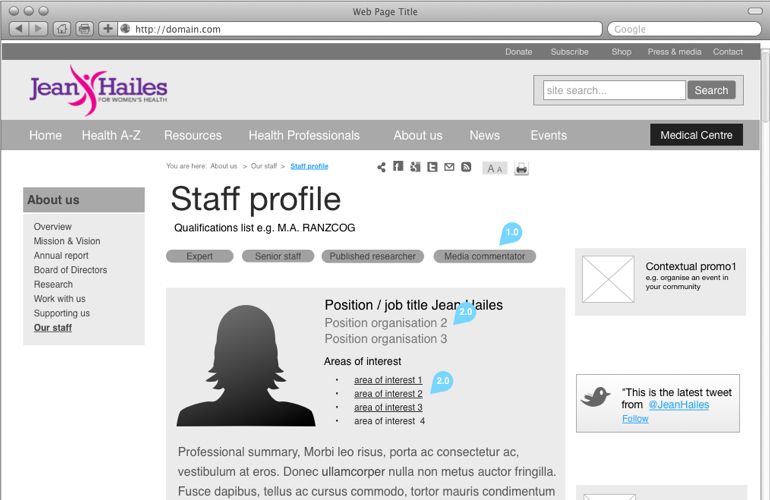
We crafted a radically simplified navigation, information architecture, and content structure centred specifically around user needs and how women actually think about their health. The site employed intelligent content tagging and filtering throughout, allowing all health-related articles and resources to be discovered by topic, life stage, and audience. This provided multiple pathways to content, recognising that different users would approach the same information from different angles.
The tagging strategy was sophisticated but invisible to users. Behind the scenes, every piece of content could carry multiple tags across different dimensions – life stage, health topic, symptom, audience type. This meant a single article about heart health could be discovered by women in their 40s thinking about prevention, women experiencing specific symptoms, and women managing existing conditions. The same content served multiple needs without duplication.
Outcome
The site redesign was an immediate success and quickly became a key component in Jean Hailes' offering. In the 18 months after launch:
- Sessions up 227%
- Users up 127%
- Page views up 38%
These metrics represented real impact: more Australian women were finding and using evidence-based health information. Women who previously might have abandoned the search or turned to unreliable sources were now successfully navigating Jean Hailes' trusted content. This directly supported the organisation's mission of translating research into health outcomes.
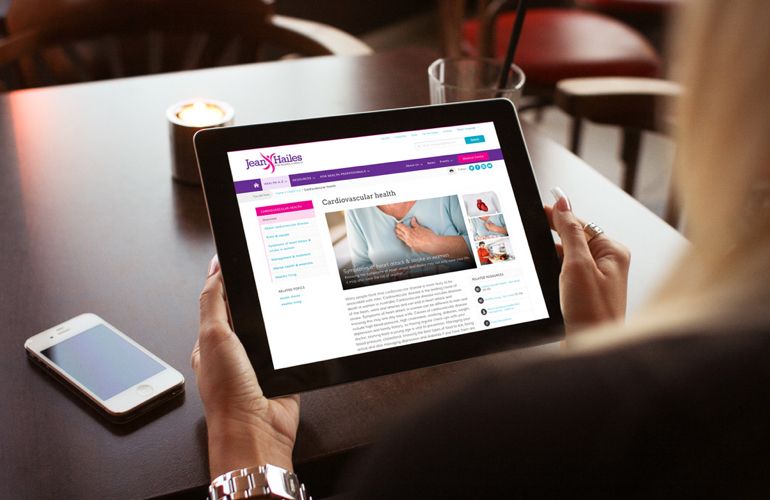
The initial success established something more valuable than a website – it established a strategic partnership. Jean Hailes recognised that digital transformation required ongoing strategic thinking, not just a one-off redesign. This led to a multi-year partnership where we delivered multiple transformational web projects and extensive strategy engagements.
Through workshops and collaborative strategy development, we helped Jean Hailes develop digital strategies and roadmaps for future enhancements. This ongoing relationship allowed us to work at a deeper strategic level, helping the organisation think through how their digital presence could evolve to serve changing women's health needs, emerging research, and new ways women sought health information.
The partnership model we established became as valuable as the initial consolidation. Rather than being vendors who delivered a project and left, we became trusted strategic advisors who understood Jean Hailes' mission, their challenges, and their ambitions. This depth of relationship enabled better strategic work over time.
Reflection
This project taught me important lessons about designing for health information needs and building strategic partnerships through demonstrated value.
First, successful consolidation isn't about simply merging content – it's about fundamentally rethinking how information should be organised around user needs. The nine original websites existed because Jean Hailes had structured information by department, programme, and initiative. Our research revealed that users didn't think that way at all. They thought about their bodies, their lives, and their health concerns. Bridging that gap between organisational structure and user mental models was the core strategic challenge.
Second, the intelligent tagging system proved particularly valuable as a strategic solution to complexity. Rather than forcing users down a single navigation path, it acknowledged that health information is inherently multifaceted. A piece of content about menopause might be relevant as a life stage issue, a specific health topic, and for multiple audience types. Designing for flexibility in how content could be discovered made the consolidated site more useful than the sum of its parts. This demonstrated that good information architecture doesn't simplify complexity away – it structures complexity in ways that feel simple to users.
Third, framing design work in terms of organisational mission proved critical for securing support and building lasting relationships. I didn't just talk about user experience or technical consolidation – I connected design decisions to Jean Hailes' ability to translate research into health outcomes for Australian women. When stakeholders understood that fragmented digital presence was undermining their mission, they supported doing the work properly. This mission-focused framing also laid groundwork for the ongoing partnership, positioning us as people who understood what Jean Hailes was trying to achieve in the world.
Fourth, the multi-year partnership that followed validated something important about how strategic relationships develop. When you demonstrate genuine understanding of an organisation's mission and their users' needs, good work creates lasting relationships. The initial consolidation proved we could deliver results, but it also proved we understood women's health information needs and how to serve them digitally. That trust became the foundation for ongoing strategic work.
Fifth, designing for women's health information requires understanding the emotional and practical context in which women seek health information. They're often worried, confused, or dealing with symptoms that affect their daily lives. They need information that's authoritative but accessible, comprehensive but not overwhelming, medically accurate but practically useful. The design strategy needed to honour these complex, sometimes contradictory needs. This meant being rigorous about evidence-based content whilst organising it around how women actually lived and thought.
Finally, this project reinforced that in mission-driven organisations, digital strategy is inseparable from organisational strategy. Jean Hailes existed to improve women's health outcomes through trusted, evidence-based information. Their digital presence was the primary mechanism for delivering on that mission at scale. Design decisions about information architecture, tagging, navigation, and content organisation weren't just UX choices – they were strategic choices about how effectively Jean Hailes could serve Australian women. Understanding that connection between design and mission was what enabled the multi-year strategic partnership to flourish.