Digital Strategy for Economic Development and Global Competitiveness
2015

Overview
In 2015, I led the UX strategy and information architecture for Film Victoria's digital consolidation project, combining eight divergent web properties into a single, unified platform that positioned Victoria as a world-class destination for international film production. The result: bounce rates down 14%, page views up 46%, and sessions up 76% in the first three months post-launch. This initial success led to a multi-year strategic partnership, including multiple transformational web projects and an extensive strategy engagement where we ran workshops and developed a digital strategy and roadmap for future enhancements.
Context
Film Victoria is a statutory authority of the Victorian State Government, providing strategic leadership, funding, and assistance for film, television, and digital media production in Victoria. They're a respected organisation in Australia's screen industry, but their digital presence wasn't reflecting that standing – and in an increasingly competitive global market for production dollars, that mattered.
Film production is serious economic development. When international productions choose Victoria, they bring tens of millions of dollars in direct spending, create hundreds of local jobs, and generate ongoing tourism and international profile. Film Victoria competes globally against other jurisdictions – from New Zealand to Eastern Europe to North American states – all vying for the same production dollars. In this context, digital experience isn't just user experience; it's economic strategy.
Film Victoria had a clear strategic goal: promote Victoria as a world-class destination for film production on a global stage by improving their services and online experience. On a tactical level, the challenge was consolidating eight existing and divergent web properties into one unified experience that would be easier to maintain and provide a seamless, personalised user experience for visitors.
Equally important, Film Victoria's services and funding were vital to supporting the industry, but their online offering required significant rethinking. The information architecture across their properties made it difficult for users to find what they needed. A user journey as simple as sourcing filming locations, searching for local talent, finding production facilities, and exploring current projects required traversing four different websites with no clear connectivity between them.
This fragmentation had strategic implications. When an international producer was deciding between Victoria and competing jurisdictions, a confusing, fragmented digital experience signalled lack of sophistication and created friction in their decision-making process. When local filmmakers couldn't easily find funding information, they were less likely to pursue projects. The digital experience directly impacted Film Victoria's ability to serve its economic development mission.
Approach
The critical challenge was understanding Film Victoria's multiple audiences and their fundamentally different needs. International producers scouting locations needed to quickly see Victoria's capabilities and infrastructure. Local independent filmmakers needed to navigate complex funding programmes. Production service companies needed to showcase their offerings. Government stakeholders needed evidence of Film Victoria's impact.
Each audience thought about Film Victoria's offerings differently, and the existing eight-site structure had been built to serve internal organisational divisions rather than external user needs.
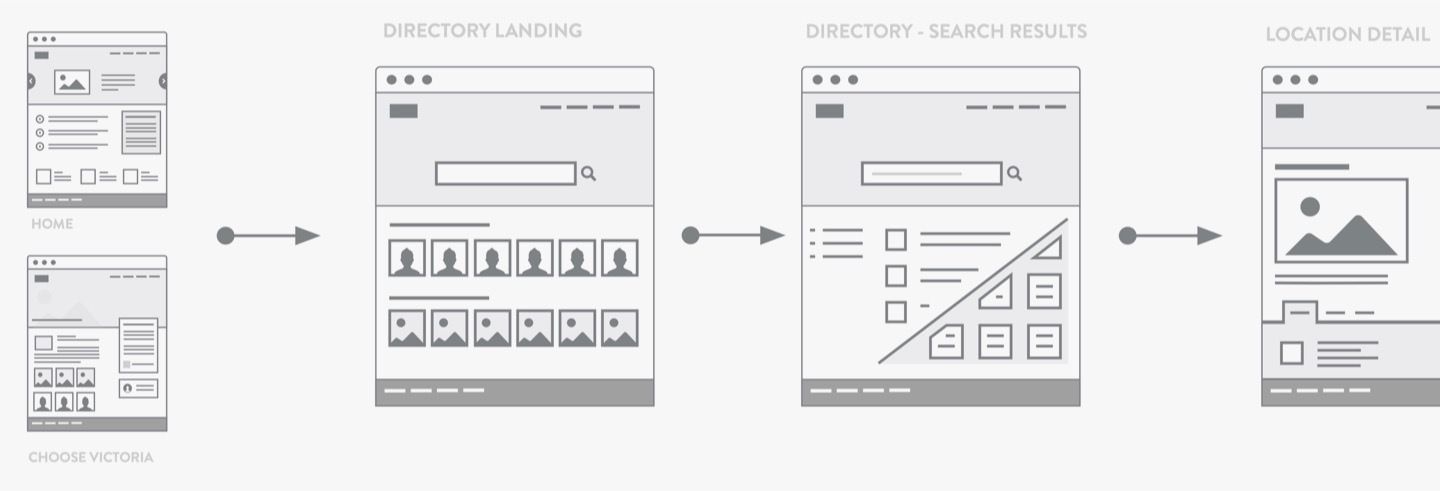
We began with extensive stakeholder research to understand both Film Victoria's strategic priorities and how different industry stakeholders actually worked. Through contextual research, workshops, interviews, surveys, and card-sorting activities, we mapped how people thought about the division of funding between media types (Film, TV, Games), project types (Fiction, Documentary), and project phases (Development, Production).
This research revealed fascinating insights. International producers thought geographically and logistically – they needed to see locations, understand incentives, and access crew and facilities quickly. Local filmmakers thought chronologically through project phases – they were trying to understand what funding they could access at development stage versus production. Production services companies thought by capability and past work – they wanted to showcase what they'd delivered.
The strategic insight was that we needed a flexible information architecture that could support multiple mental models simultaneously, allowing different users to find the same information through pathways that made sense to them.
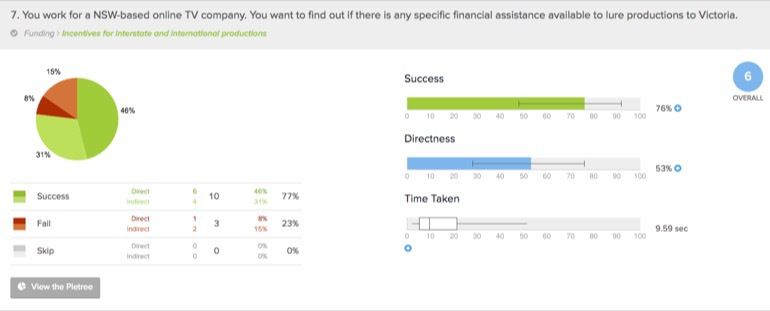
We prioritised current needs whilst ensuring our approach remained flexible enough to adapt to the industry's future requirements. The screen industry was changing rapidly – streaming services were emerging, production methods were evolving, new types of content were being funded. The information architecture needed to accommodate these shifts without requiring fundamental restructuring.
It was crucial that the information architecture of the combined websites was designed to support key user journeys and tested to ensure primary tasks could be easily completed. We focused on creating clear pathways through previously disconnected content, enabling users to move seamlessly between finding locations, talent, facilities, and projects without jumping across multiple sites.
Outcome
We launched the consolidated platform in 2016. The year-on-year comparison for the first three months demonstrated significant impact:
- Bounce rates down 14%
- Page views up 46%
- Sessions up 76%
- New users increased by 51%
The new platform successfully promoted Victoria as a world-class film production destination whilst making Film Victoria's funding programmes and services far more accessible to the industry. The consolidated experience presented a more sophisticated, professional face to international producers whilst making it genuinely easier for local filmmakers to navigate funding options.
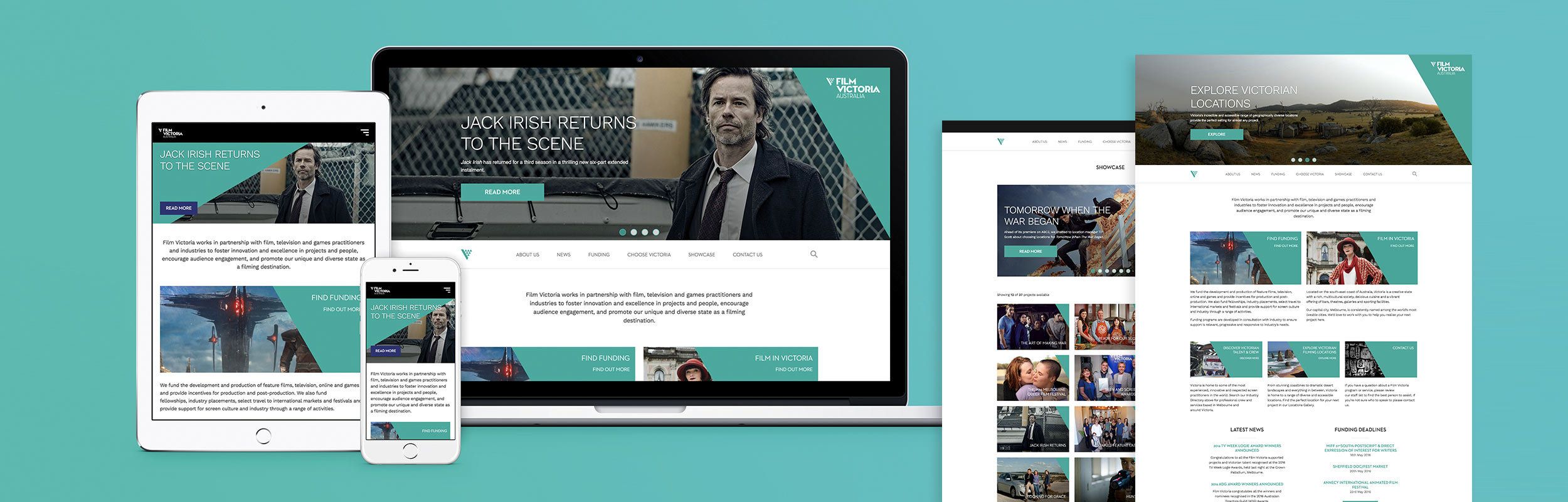
Beyond the immediate metrics, the project's success established a foundation for ongoing partnership. Film Victoria recognised that digital transformation required sustained strategic thinking, not just a one-off website redesign. This initial engagement led to a multi-year partnership where we continued to evolve the platform, ran strategic workshops to identify new opportunities, and developed digital strategies and roadmaps for future enhancements.
This long-term relationship allowed us to work more deeply with Film Victoria, understanding their evolving priorities as the screen industry changed, and ensuring their digital presence continued to support their economic development mission over time.
Reflection
This project taught me that digital experience in economic development contexts requires thinking beyond traditional UX metrics to understand broader strategic impact.
Film Victoria's mission wasn't to have a nice website – it was to attract production investment to Victoria, support local screen industry development, and promote Victoria globally. The digital platform needed to serve that mission. This meant understanding not just user needs, but economic outcomes. When we made it easier for international producers to discover Victoria's locations and capabilities, we were supporting the state's economic development strategy. When we clarified funding pathways for local filmmakers, we were enabling industry growth.
The card-sorting research revealed something important about organisational versus user taxonomies. Film Victoria had structured their eight websites around internal divisions and programme names that made perfect sense internally but meant nothing to users. A programme called "Production Investment" might live in the "Film & Television" section, but a documentary filmmaker wouldn't necessarily know to look there. By reorganising around how users actually thought about their needs – what stage am I at, what kind of project am I making, what resources do I need – we made the same information far more discoverable.
The multi-year partnership that emerged from this initial project validated something important about strategic relationships. When you demonstrate genuine understanding of an organisation's mission and deliver outcomes that serve that mission, clients don't just want a website – they want an ongoing strategic partner. The initial consolidation project solved an immediate problem, but the continuing relationship allowed us to work at a deeper strategic level, helping Film Victoria think through how digital experience could evolve to support their changing priorities.
This also reinforced that consolidation isn't just about reducing the number of properties – it's about creating logical connections between previously siloed information. The eight separate websites had created artificial barriers between information that users needed to access together. By mapping actual user journeys – the international producer who needs to see both locations and production incentives, the local filmmaker who needs to understand both development funding and production funding – we identified opportunities to create seamless pathways that reflected how people actually worked.
Finally, the project demonstrated the importance of designing for flexibility. The screen industry was changing rapidly in 2015–2016, with streaming services emerging and new forms of content being produced. Rather than creating a rigid structure that would break as things evolved, we built an information architecture that could accommodate new types of content, new funding programmes, and new user needs without requiring fundamental restructuring. That flexibility meant the platform could evolve with the industry rather than becoming obsolete.
Designing for economic development requires understanding that digital experience isn't separate from business strategy – it is business strategy. Every design decision either supports or undermines the organisation's ability to achieve its mission. That lens changes how you approach everything from information architecture to content strategy to success metrics.