Strategic Personalisation Platform Enabling Deakin University's Digital Education Future
2013

Overview
In 2013, I led the UX strategy, research, and design for DeakinSync, Deakin University's groundbreaking student portal serving 60,000 students across Victoria. Working embedded within Deakin's Business Solutions team, I drove the product vision for an intelligent, context-aware platform that became widely praised as a leading innovative solution amongst Australian universities, setting a new benchmark for personalised digital education experiences.
Context
Deakin University is a well-known Australian public university with campuses across Victoria, serving around 60,000 students each year. In 2013, higher education was experiencing significant disruption. Online learning was expanding, student demographics were diversifying, and universities were competing globally for enrolments. Digital experience was becoming a key differentiator.
In August 2013, Deakin approached Thirst Studios to provide UX consulting and design services for a transformational new university portal for students. This wasn't just a technology project – it was infrastructure for Deakin's strategic shift toward personalised, flexible education that could serve diverse student populations.
The product – DeakinSync – would constitute a one-stop solution for students, furnishing them with everything they needed to successfully navigate their time at university. From calendars and unit site access to online collaboration, payments, and a suite of software tools, the platform needed to be designed from the ground up with the wide variety of student needs placed firmly front of mind.
The strategic challenge was significant. University students have vastly different needs depending on their course, year level, campus location, study mode (on-campus, online, or mixed), and even the time of day they're accessing the system. A first-year on-campus engineering student has completely different requirements from a part-time online MBA student juggling work and study.
Traditional university portals treated all students the same, presenting the same overwhelming array of links and information regardless of context. This one-size-fits-all approach was failing students and undermining Deakin's strategic ambition to deliver personalised education at scale.
The platform needed to capture data from a wide variety of university systems yet be flexible enough to deliver personalised content relevant to each individual student. This required not just good UX design, but a fundamental rethinking of how universities deliver digital services to students.
Approach
My role went beyond traditional UX consulting. Working embedded within Deakin's Business Solutions team, I was responsible for shaping the product vision, defining the personalisation strategy, and ensuring we built something genuinely transformative rather than just another portal.
Following an extensive period of consultation workshops and interviews with various student user groups and university stakeholders, we worked to understand the complexity of student journeys at Deakin. We mapped out how different types of students moved through their day, their semester, and their entire university experience.
We discovered that context mattered enormously. A student logging in at 8am on a Monday needed different information (today's timetable, campus maps, due assignments) than the same student logging in at 11pm on a Sunday (upcoming deadlines, library resources, study group collaboration tools). A student in their first week needed orientation information and basic navigation help, whilst a final-year student needed quick access to advanced research tools and career services.
This insight shaped our strategic approach: rather than creating a static portal with everything available all the time, we would design an intelligent interface that could deliver personalised content across multiple device resolutions based on each student's individual context – their course, campus, study mode, current needs, and even time of day.
This was ambitious. It meant building sophisticated logic to understand student context, integrating data from multiple university systems, and creating a flexible interface that could adapt whilst maintaining coherence. It also meant convincing stakeholders that personalisation was worth the additional complexity.
I developed the product strategy and vision, articulating how personalisation would work and why it mattered for Deakin's competitive position. We weren't just making things easier for current students – we were building infrastructure that would enable Deakin to compete for students who expected Netflix-level personalisation in all their digital experiences.
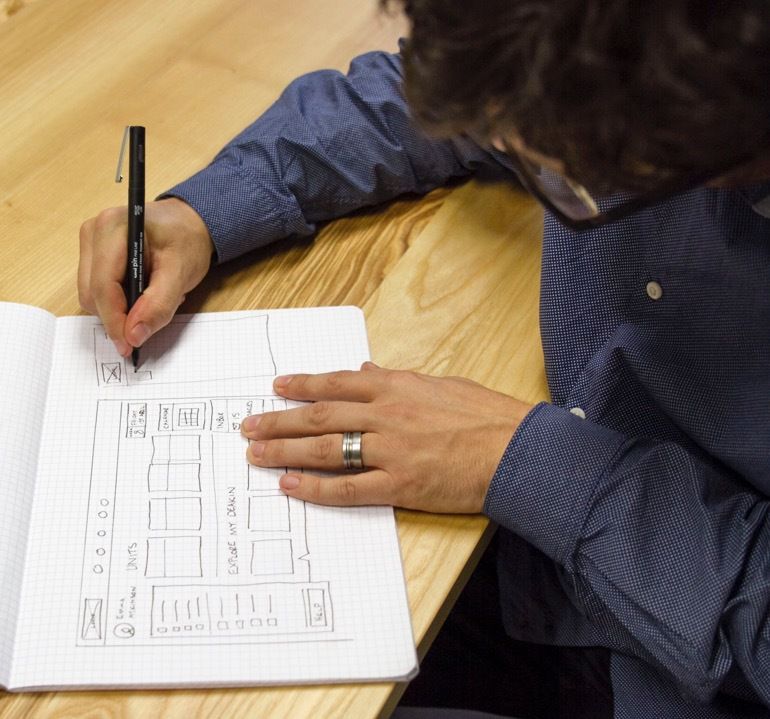
Multiple rounds of prototyping and testing were undertaken, with Thirst working predominantly on-site within Deakin's Business Solutions team. This embedded approach meant I could deliver product strategy, research, UX/UI design, and front-end development whilst maintaining close collaboration with Deakin's technology teams and stakeholders.
I continued to consult throughout the development stages, working closely with Deakin's own tech team to ensure that the product vision remained intact and was successfully delivered as originally intended. This ongoing partnership approach was critical for a project of this complexity and scale, requiring constant advocacy to maintain the strategic vision against pressures to simplify or compromise.
Outcome
The product launched to enormous success, with hugely positive feedback from students and university staff alike. DeakinSync quickly became an invaluable, key tool for all students and staff across all Deakin campuses.
The intelligent personalisation meant students saw what they needed, when they needed it. The dashboard adapted to their individual circumstances, surfacing relevant deadlines, timetables, unit sites, and resources without overwhelming them with information that didn't apply to their situation. This wasn't just convenience – it fundamentally changed how students engaged with university systems.
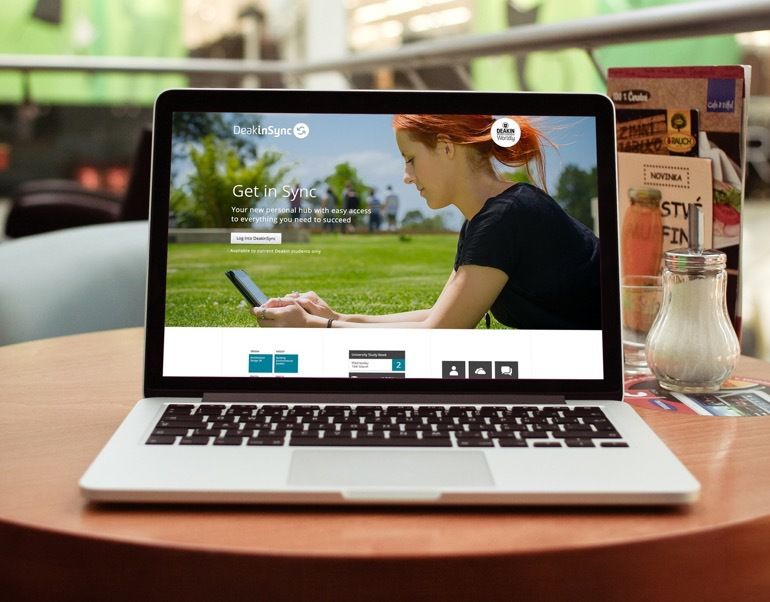
DeakinSync has been widely praised as a well-designed, leading, innovative solution amongst many other universities and research organisations across Australia, setting a new benchmark for what student portals could achieve. Other universities began studying DeakinSync as they planned their own digital transformations, recognising it as a model for personalised digital education platforms.
The platform's success validated Deakin's strategic investment in personalised digital experience, providing infrastructure that supported their broader ambitions around flexible, student-centred education. It became a competitive advantage in student recruitment and a key enabler of Deakin's growing online education offerings.
Reflection
This project taught me valuable lessons about leading product strategy whilst embedded within client organisations.
First, embedded collaboration requires a different leadership approach than traditional consulting. I wasn't just delivering designs and recommendations – I was part of the team, which meant building relationships, understanding internal politics, and influencing decisions through ongoing collaboration rather than formal presentations. This required operating as a strategic partner, not just a consultant.
Second, personalisation at scale requires strong product vision and constant advocacy. The temptation throughout the project was to simplify – to build a traditional portal with standard navigation and let students figure it out. I had to consistently articulate why personalisation mattered, how it would work technically, and why the additional complexity was worth it. This meant translating between different stakeholder languages: showing students how it would help them, showing tech teams how it could be built, showing executives how it supported strategic goals.
Third, the personalisation strategy proved transformative but required rethinking fundamental assumptions. University portals traditionally try to be everything to everyone, resulting in overwhelming interfaces where students struggle to find what they need. By focusing on context-aware personalisation, we created something that felt simpler despite being more sophisticated under the hood. This demonstrated that good strategy often means doing more technically to create less cognitive load for users.
Fourth, the ongoing consultation throughout development was essential for maintaining strategic vision. With a project this complex, involving multiple university systems and stakeholder groups, design decisions that seemed straightforward on paper often revealed complications during implementation. Being embedded meant I could work through these challenges in real-time, finding creative solutions that preserved the core vision even when we had to adapt tactics.
Fifth, designing for higher education requires understanding institutional strategy, not just user needs. Deakin wasn't just trying to make students' lives easier – they were competing for enrolments, expanding online education, and positioning themselves in a changing sector. DeakinSync needed to serve those strategic goals. This meant thinking beyond immediate user satisfaction to longer-term platform capabilities that would support Deakin's evolution.
Most importantly, the project reinforced that transformational digital products require removing friction at a strategic level. University is already complex – navigating courses, deadlines, resources, and requirements. A well-designed portal shouldn't add to that complexity; it should use intelligence and personalisation to give students exactly what they need, when they need it, so they can focus on what matters: learning.
The widespread recognition DeakinSync received from other universities validated something important: when you solve strategic challenges in genuinely innovative ways, you create competitive advantage. Deakin didn't just get a better portal – they got infrastructure that positioned them as leaders in digital education.